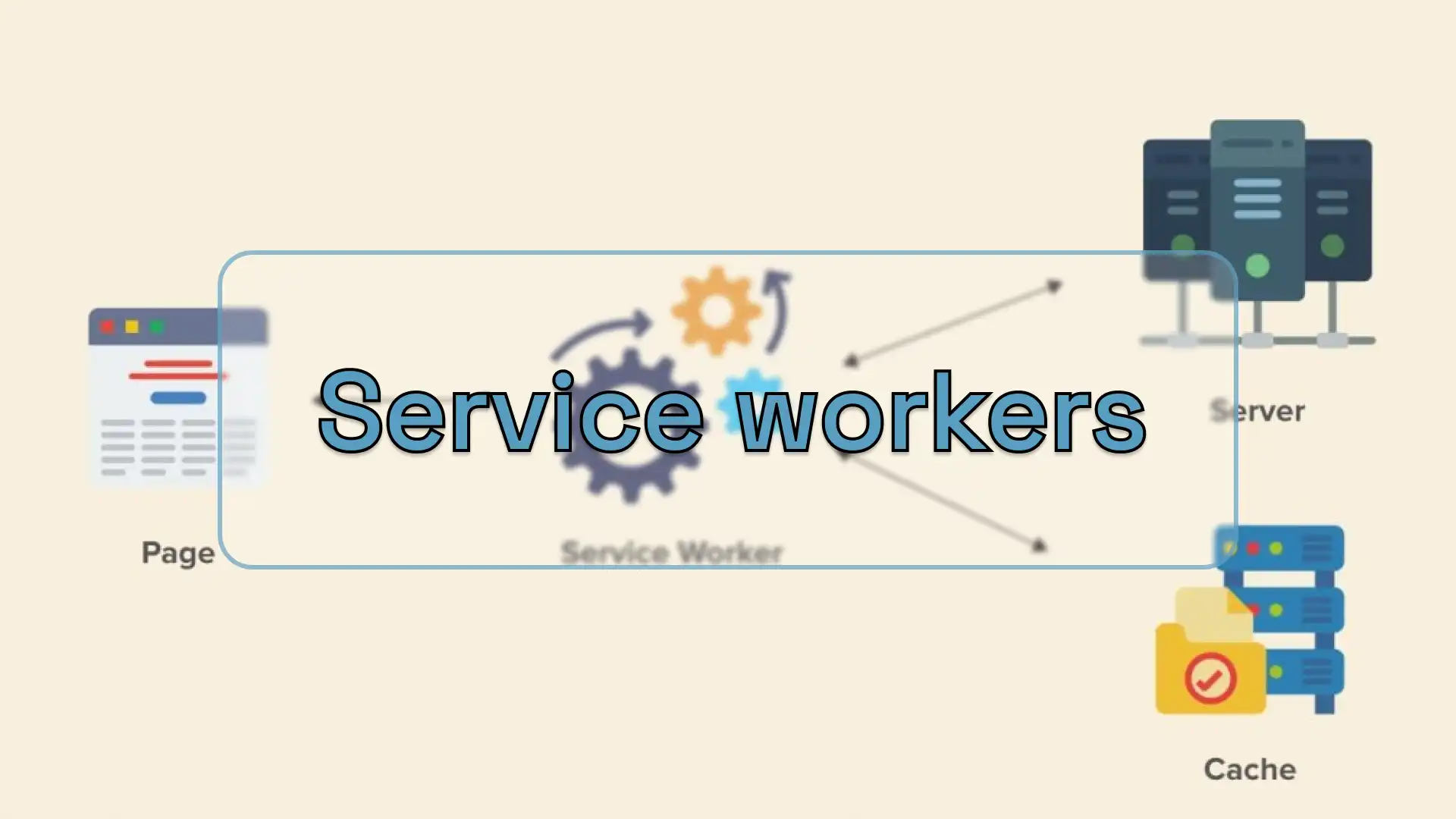
The Latency Problem with Local Assets
In a standard web app, even if your data is in IndexedDB, the browser often expects to fetch resources (like images or fonts) via URL. When building my EPUB reader, I didn’t want the UI to break or show “broken image” icons if the user was offline, nor did I want to bloat the main thread by manually converting every Blob to an ObjectURL in React state.
The Solution: Request Interception
I implemented a Service Worker to act as a programmable proxy between the browser and the network. This allowed me to intercept specific resource requests and serve them directly from the local cache or IndexedDB.
1. Intercepting EPUB Resources
Inside an EPUB, images and stylesheets are referenced by relative paths. When the reader renders a chapter, the browser tries to fetch these. The Service Worker catches these calls:
- Regex Matching: It identifies requests directed to a virtual “assets” path.
- Cache-First Strategy: It checks if the resource exists in the local storage.
- Synthesizing Responses: It creates a new
Responseobject with the correct MIME type, making the browser think it just finished a successful network download.
2. Handling Heavy Binaries
EPUB files can be large. Instead of loading the entire book into memory, the Service Worker helps stream only the necessary parts.
- It intercepts requests for specific “virtual” URLs.
- It fetches the corresponding
Blobfrom IndexedDB. - It returns a response that the
<img>or<link>tags can consume natively.
Why this adds value
Using this architecture provided three massive benefits:
- True Offline Capability: Once a book is imported, the user can turn off their internet and the experience remains identical.
- Performance: Serving assets from local memory is significantly faster than any CDN.
- Memory Management: By intercepting requests, I avoided the need to create thousands of
URL.createObjectURLreferences that could lead to memory leaks if not properly revoked.
Key Snippet: The Fetch Interceptor
self.addEventListener('fetch', (event: FetchEvent) => {
  const url = new URL(event.request.url);
  if (url.pathname.includes('/epub-content/')) {
    event.respondWith(handleEpubRequest(event));
  }
});
Conclusion
- Service Workers transformed the application from a “website that views files” into a robust Platform.
- By decoupling resource delivery from the network, the UI stays snappy and reliable regardless of the user’s connection status.